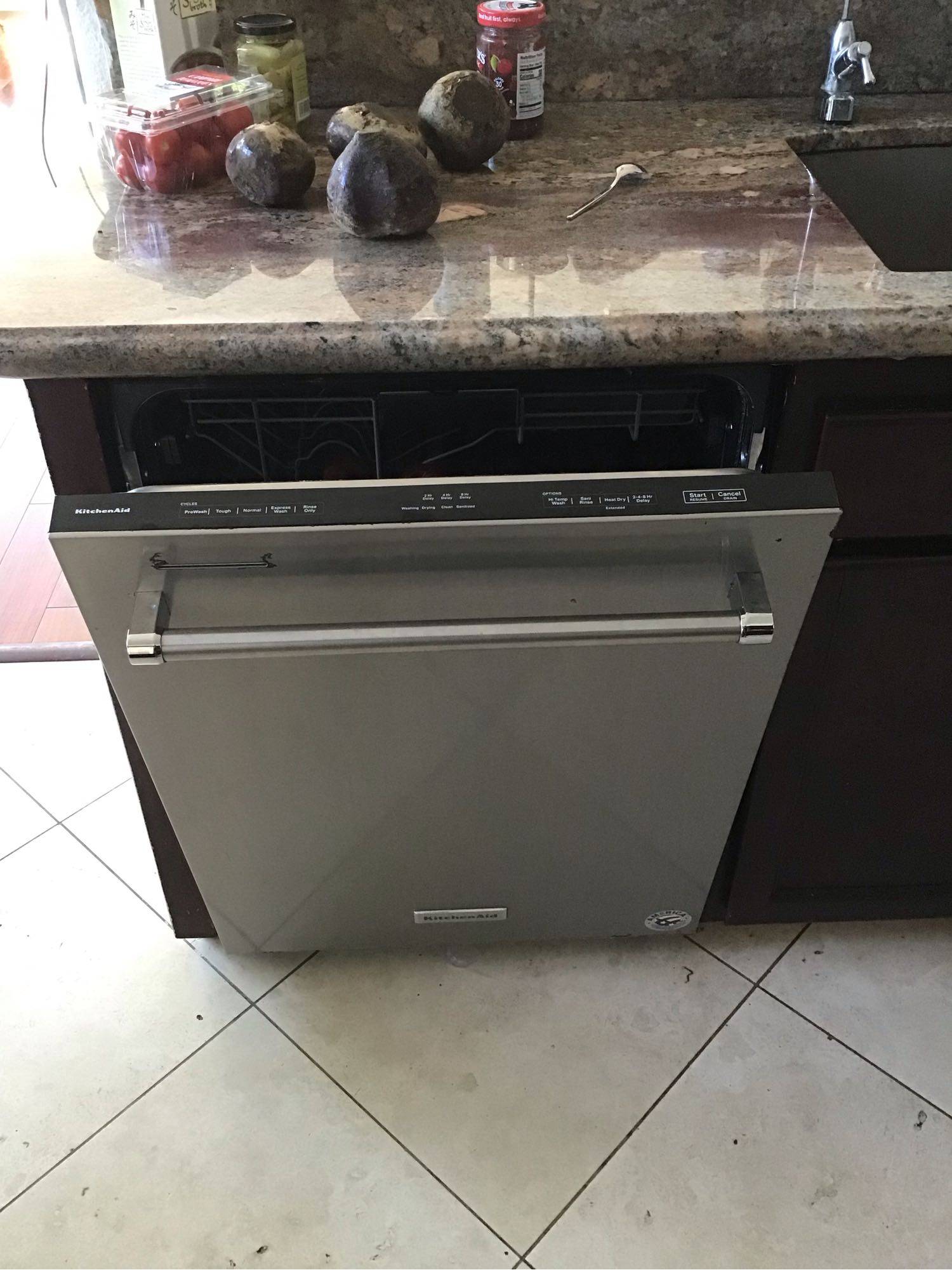
A dishwasher should fill with a controlled amount of water at the beginning of each cycle. When a GE dishwasher overfills, water may rise too high inside the tub, leak onto the floor, or continue entering even after the normal fill stage has ended. In some cases, the dishwasher may stop working because its safety system detects an abnormal water level.
Two common causes of overfilling are a defective water inlet valve and a malfunctioning float switch. Both components play an important role in controlling how much water enters the dishwasher, but they fail in different ways. Identifying the source of the problem early can help prevent water damage and more expensive repairs.
How a GE Dishwasher Controls the Water Level
During a normal cycle, the dishwasher sends an electrical signal to the water inlet valve. The valve opens and allows water from the household supply line to enter the tub. Once the appropriate water level is reached, the control system stops the filling process. The float and float switch provide an additional layer of protection. The float is usually located near the bottom of the dishwasher tub and moves upward as the water level rises. When it reaches a certain position, the float switch signals the control system to stop filling. If either component fails, the dishwasher may receive too much water.Water Inlet Valve Problems
The water inlet valve is one of the first components to check when a GE dishwasher overfills. This valve uses an electrically controlled mechanism to regulate water entering the appliance. A faulty valve can become stuck partially or completely open. When this happens, water may continue flowing into the dishwasher even when the control board is no longer calling for additional water. One common sign is continued water flow after the dishwasher has finished filling. In more serious cases, water can keep entering the tub while the dishwasher is turned off. If you notice this, shutting off the dishwasher’s water supply is a good precaution until the problem can be inspected. A damaged valve may also have internal wear, mineral buildup, or a weakened diaphragm that prevents it from closing properly. Because the valve is connected directly to the household water supply, replacing it may be necessary rather than attempting to clean or repair its internal mechanism.Float Switch Failure
The float switch is another important part of the dishwasher’s water-level protection system. As water enters the tub, the float rises. When it reaches its designed position, the switch should interrupt the filling process. If the float is stuck, obstructed, or damaged, it may not move correctly. A defective switch can also fail to send the correct electrical signal. Food debris, detergent residue, or objects placed incorrectly inside the dishwasher can sometimes interfere with the float’s movement. A damaged float or switch, however, may require replacement. If the float moves freely but the dishwasher continues to overfill, the problem may be electrical or related to the switch itself. Testing the component helps determine whether it is responding correctly.Other Issues That Can Cause Overfilling
Although the water inlet valve and float switch are common suspects, they are not the only possible causes. A control board problem can cause the dishwasher to keep sending power to the inlet valve when it should stop. Wiring problems can also interfere with communication between the control system and water-level components. A blocked or improperly positioned float can produce symptoms similar to an electrical failure. The dishwasher may appear to have a defective switch when the actual problem is physical interference. Water pressure can also affect dishwasher operation. If the pressure is outside the appliance’s expected operating range, filling may not occur as intended. A professional inspection can help separate a water-supply issue from a component failure.Signs Your GE Dishwasher May Be Overfilling
Pay attention to several warning signs:- Water level inside the tub appears unusually high.
- Water leaks from the dishwasher during a cycle.
- The dishwasher continues filling longer than normal.
- Water enters the tub even when the appliance is not running.
- The float does not move freely.
- The dishwasher leaves standing water at an abnormal level.
- The appliance produces unusual filling or draining behavior.