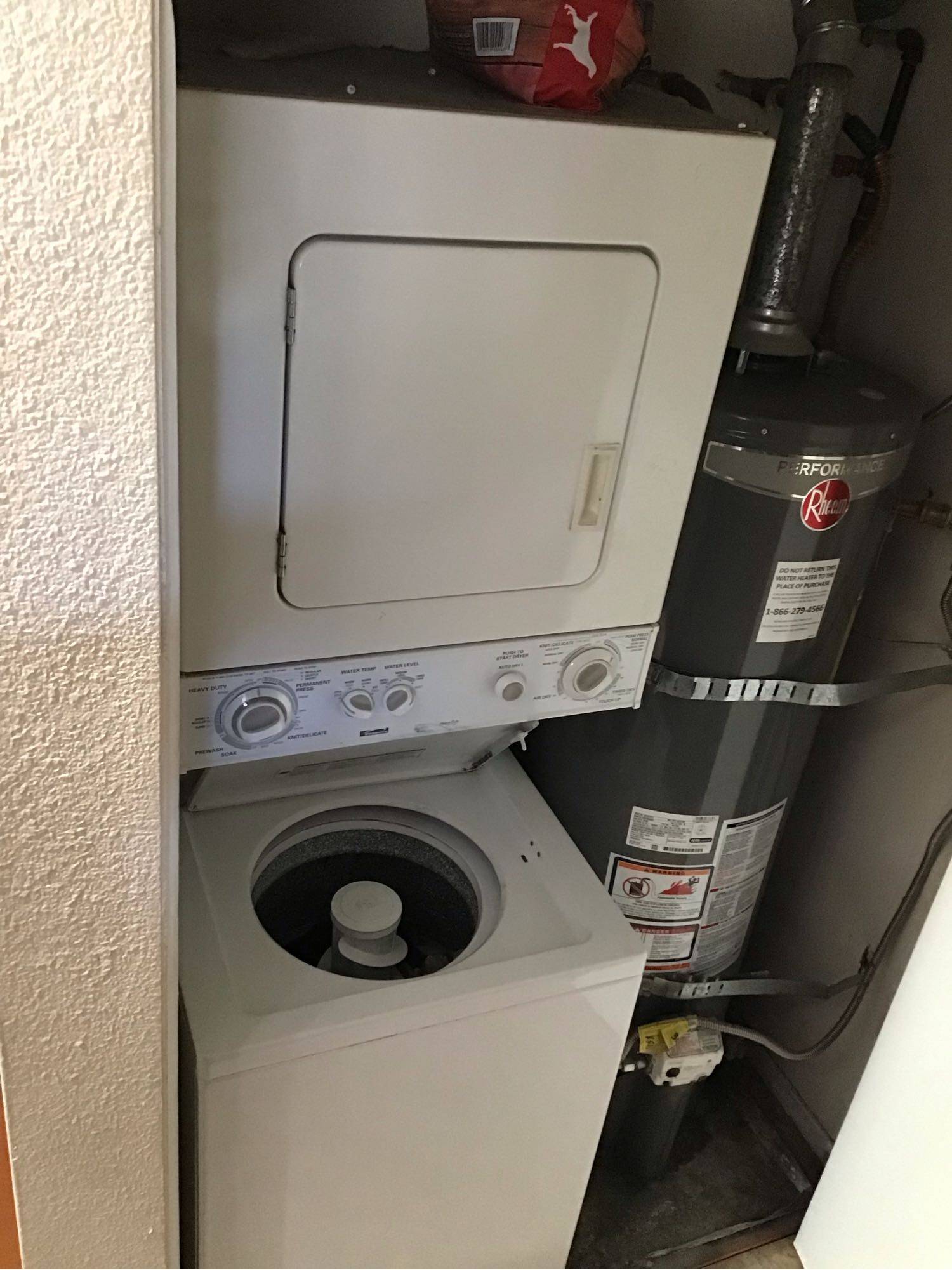
A Kenmore washing machine that stops before the spin cycle can leave clothes sitting in a tub full of water. In many cases, the washer reaches the drain stage but cannot remove the water, so the control system prevents the spin cycle from starting. A clogged drain system is one possible cause, but a failing drain pump, motor, lid switch, drive system, or electronic control can also create the same symptom.
Understanding what happens before the washer stops can help narrow down the problem. If the machine completes washing and rinsing but stops with water inside, the drain system should be one of the first areas inspected. If the tub drains normally but the drum never begins spinning, the motor or another component in the drive system may be responsible.
One common cause is a restricted drain hose. A hose that is kinked, crushed, or blocked can slow or completely prevent water from leaving the washer. Small objects, lint, fabric pieces, and detergent residue can also contribute to restrictions. When the washer cannot drain within the expected time, its control system may stop the cycle rather than continue to spin with a full tub.
The drain pump itself is another important component to check. The pump is responsible for moving wastewater out of the washing machine. Over time, its internal impeller can become damaged or obstructed. A pump may also develop an electrical or mechanical failure. You might hear the pump humming while little or no water comes out, or you may hear unusual grinding or buzzing sounds during the drain portion of the cycle.
A washer that stops before spinning does not always have a defective pump. The pump needs to receive the correct electrical signal from the control system, and the washer must also detect the appropriate operating conditions before entering high-speed spin. A technician can test the pump electrically and mechanically instead of replacing it based only on the symptom.
The lid switch or door-lock assembly can also prevent the spin cycle. Kenmore washing machines use safety mechanisms to prevent the basket from spinning when the lid or door is open. If the switch does not properly detect that the lid is closed, the washer may wash or drain but refuse to spin. A damaged switch, wiring problem, or faulty lock assembly can produce this type of behavior.
Another possibility is a motor-related problem. The drive motor provides the power required for the washer’s mechanical operations. Depending on the Kenmore model, the machine may use a belt, motor coupling, actuator, transmission, or other drive components between the motor and basket. If the motor overheats, fails to start, or cannot produce sufficient torque, the washer may stop before or during the spin cycle.
A worn motor coupling can be particularly relevant on certain top-load Kenmore models. The coupling transfers power from the motor to the transmission and can wear out after repeated use. A failed coupling may allow the washer to fill, wash, and drain but prevent the basket from spinning correctly.
The drive belt is another component that can affect spinning. A stretched, broken, or damaged belt may prevent the basket from reaching the required speed. You may hear the motor operating while the drum remains stationary. However, belt problems are model-dependent, so the washer’s specific design should be identified before diagnosing the component.
Electronic controls can also contribute to cycle interruptions. The main control board monitors water level, drain operation, lid or door status, motor activity, and other signals. If the board receives an incorrect signal from a sensor or fails to activate a component, the washer may stop unexpectedly. Diagnosing an electronic problem usually requires checking the related components and wiring first.
Before calling for service, you can perform a few basic checks. Disconnect the washer from power, inspect the drain hose for visible kinks, and make sure the household drain is not blocked. If water remains in the tub, avoid repeatedly restarting the machine because continued attempts may place additional stress on the pump or motor.
If the washer makes a humming sound but does not drain, the pump may be obstructed or failing. If the washer drains completely but never spins, the technician should investigate the lid switch, motor, belt, coupling, actuator, transmission, and control system according to the model. If the machine stops at different points during different cycles, the problem may involve a control or sensor issue rather than one isolated mechanical component.
Professional diagnosis is especially useful when the washer contains standing water or produces unusual electrical or mechanical noises. A qualified appliance technician can inspect the drain system, test the pump and motor, check safety switches, examine the drive components, and identify the actual cause before recommending a repair.
A Kenmore washing machine that stops before the spin cycle should not be ignored. Continuing to operate a washer with a failing drain pump or motor can lead to additional problems and may leave laundry soaked after every cycle. Prompt troubleshooting can help determine whether the issue is a simple blockage or a component that requires replacement.
If your Kenmore washer stops before spinning, leaves water in the tub, or makes unusual noises during draining, contact San Diego Appliance Repair Center for professional appliance service. A technician can diagnose the problem and determine which component needs attention so your washing machine can return to reliable operation.