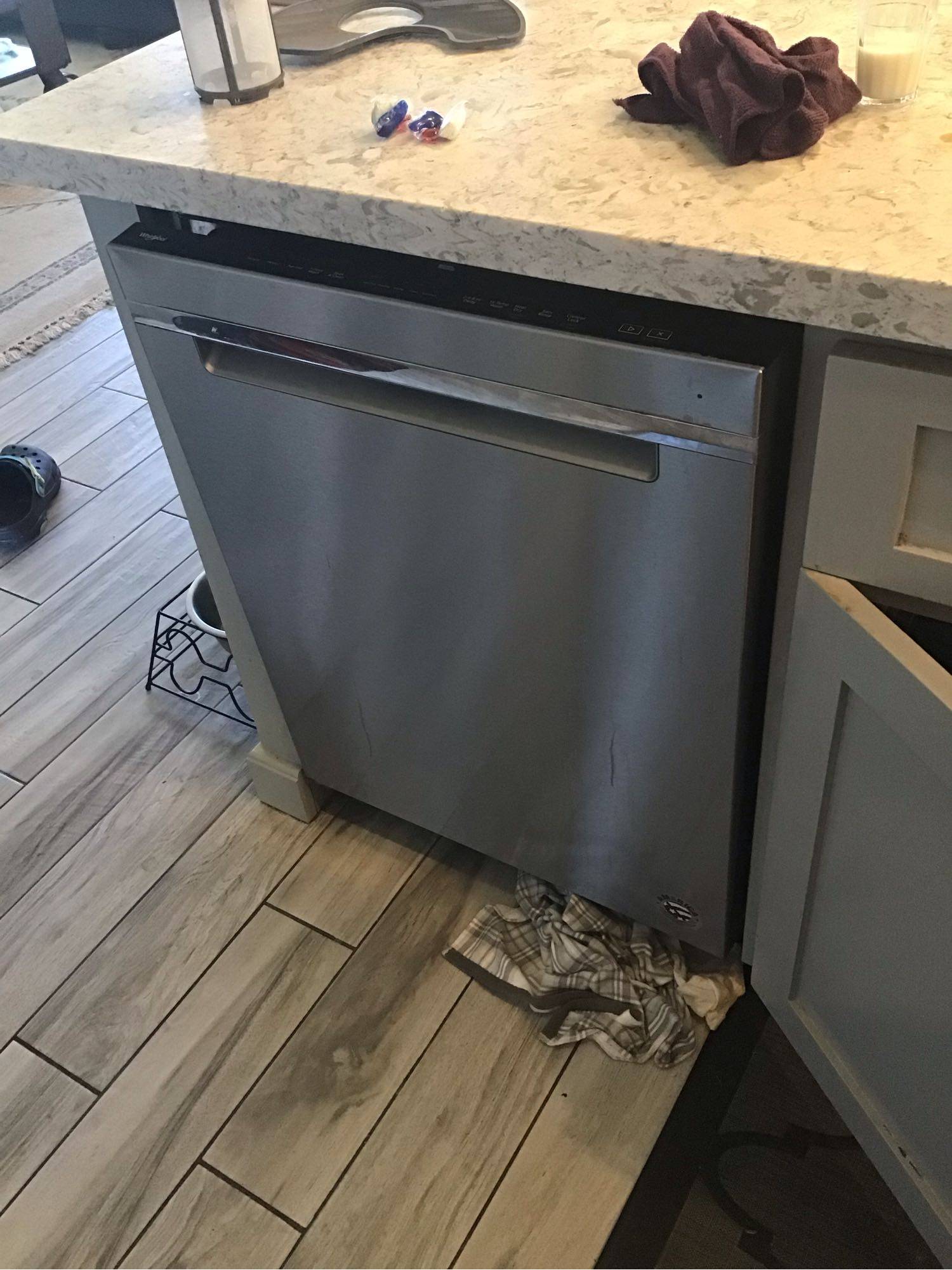
Finding water on the kitchen floor after running your KitchenAid dishwasher is frustrating. A leak around the door may start as a few drops near the bottom corners. Small leaks may become more noticeable during longer cycles. The problem often involves a worn door gasket or a damaged spray arm, but detergent, loading habits, and installation issues can produce similar symptoms. Identifying when and where the water appears helps determine which components need attention.
The dishwasher door gasket is a flexible rubber seal fitted around the tub opening. Its job is to prevent wash water from escaping while the machine operates. The material can become compressed, brittle, or torn. Grease, food particles, and mineral deposits can also prevent the gasket from making consistent contact with the door. When the seal no longer fits properly, water may trickle down the front panel.
Some models have a separate lower door seal, which should be checked when water gathers beneath the front panel. Because gasket designs vary across KitchenAid models, technicians should confirm the model number before ordering parts or attempting to adjust the assembly.
A leaking KitchenAid dishwasher door does not automatically mean the gasket must be replaced. First, inspect the visible seal carefully. Wipe away residue with a soft damp cloth. Look for utensils, oversized plates, or rack components preventing the door from closing completely. If the rubber has split or permanently lost its shape, a model compatible replacement may be necessary.
The spray arms deserve equal attention because they direct pressurized water throughout the dishwasher tub. These rotating components distribute water across dishes without continuously concentrating a jet against the door. A cracked spray arm, blocked nozzle, or loose mounting connection can change the spray pattern. Water may strike the lower door area with unusual force and escape past a seal that otherwise appears intact.
Before inspecting a spray arm, switch off the dishwasher and allow moving parts to stop. Check whether dishes or utensils obstruct the arm’s rotation. Inspect the accessible surfaces for splits, distortion, and buildup around the spray holes. Food debris can restrict nozzles. Avoid forcing a stuck component. If the arm is cracked, replacing it with the appropriate KitchenAid dishwasher part is generally more reliable than attempting a temporary repair.
Sometimes the door seal and spray arms are functioning correctly, yet water still escapes. Using ordinary dish soap instead of automatic dishwasher detergent creates excessive foam that can push past the door. Too much dishwasher detergent or residue from handwashing dishes can cause similar trouble. If you notice thick suds, stop the cycle and follow the owner’s manual for removing them safely. Use the recommended detergent and amount for your machine, rather than adding extra product to improve cleaning.
The way dishes are loaded can also contribute to a dishwasher leaking from the front. A cutting board, tall utensil, or large pan might interfere with the spray arm or keep the rack from sliding fully into position. Items projecting toward the door can interrupt the seal. Check that both racks move freely, the detergent dispenser can open, and the spray arms have enough clearance to rotate. Rearranging the load is a simple check.
A dishwasher that is not level may allow water to collect unevenly near the front edge of the tub. Improper installation can also leave the unit slightly twisted within its cabinet opening, affecting how the door meets the gasket. A worn or misaligned door latch may prevent consistent closure. These conditions can resemble gasket failure, so replacing the seal without checking alignment may not solve the problem. Professional inspection can determine whether leveling, latch adjustment, or another repair is appropriate.
Pay attention to the timing and location of the leak. Water appearing immediately during filling can suggest an inlet valve or overfill problem, while dripping during spraying may point toward the spray arm, gasket, or door alignment. A puddle beneath the center of the machine can originate from a pump seal, hose, or another internal connection rather than the door. Water sometimes travels along panels before reaching the floor, making the visible puddle misleading. Accurate diagnosis matters because replacing the wrong component wastes time and money.
If your KitchenAid dishwasher is actively leaking, stop using it until the cause has been identified. Shut off the water supply and disconnect power at the breaker when it is safe to do so, particularly if water is near electrical connections. Dry the surrounding area and watch for damp flooring or swollen cabinet panels. Do not run repeated cycles simply to see whether the leak returns. Continued exposure to moisture can damage nearby materials and may create electrical hazards that require professional attention.
San Diego Appliance Repair Center helps local homeowners troubleshoot KitchenAid dishwasher leaks and other dishwasher performance problems. Whether the issue involves a deteriorated door gasket, a broken spray arm, an uneven installation, or a malfunctioning inlet component, proper diagnosis is the starting point for a lasting repair. If water is collecting in front of your dishwasher, contact San Diego Appliance Repair Center to arrange an inspection. Addressing the problem promptly can help protect your kitchen and get your dishwasher back to dependable daily use.