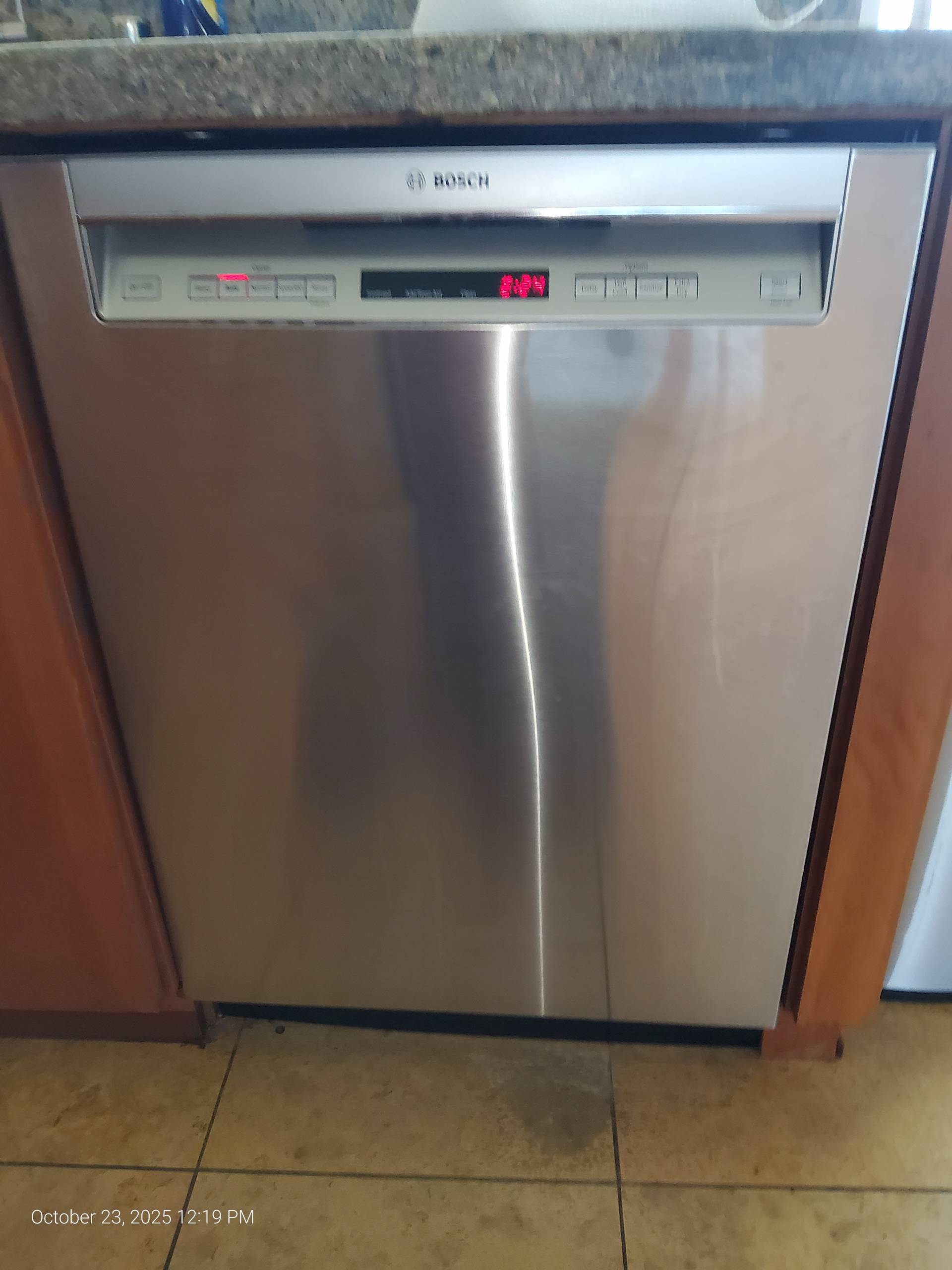
A dishwasher can complete a full cycle, use hot water, and still leave dishes noticeably damp and already cooling down when you unload them. The washing stage looks successful, yet the drying stage underperforms. This gap usually points to a loss of heat retention inside the machine rather than a problem with cleaning performance.
Drying in most dishwashers depends on residual heat. After the final rinse, hot surfaces inside the tub and on the dishes themselves should hold enough temperature to allow moisture to evaporate gradually. When that stored heat dissipates too quickly, condensation remains on plates, glasses, and internal walls.
How heat retention is supposed to work
During the final rinse, water reaches high temperatures to sanitize dishes and prepare them for drying. The tub, racks, and dish surfaces absorb part of that heat. Once the cycle ends, this stored thermal energy continues working for a short period, allowing moisture to evaporate naturally. If insulation is intact and the internal system is sealed properly, heat dissipates slowly and evenly. This controlled cooling phase is essential for effective drying without additional energy input. When this balance is disrupted, the machine may still complete every stage correctly, but drying efficiency drops sharply.Heat escaping through worn door seals
One of the most common causes is deterioration of the door gasket. The seal is responsible for keeping hot, moist air inside the dishwasher during and after the cycle. Even small deformations or hardened rubber sections create micro-gaps where heat escapes. When warm air leaks out too early, internal temperature drops faster than designed. Dishes lose heat before moisture has time to evaporate, which results in wet surfaces even after a full program. This issue often develops gradually, making it easy to miss until drying performance noticeably declines.Damaged or weakened insulation around the tub
Dishwashers rely on insulation layers around the inner chamber to maintain stable temperatures. If this insulation becomes compressed, degraded, or partially detached, heat transfer to the external environment increases. As a result, the machine cools down too quickly after the wash cycle. The water inside may have been hot, but the energy does not stay in the system long enough to support proper drying. This type of problem is usually hidden behind panels, which is why it often goes unnoticed during routine inspection.Early shutdown of heating elements
In some cases, the heating system itself works inconsistently. If heating elements shut off too early, either due to wear or electrical control issues, the final rinse may not reach the required temperature threshold for effective drying. Even a small reduction in heating duration can change the entire drying outcome. The dishes appear clean, but residual heat is insufficient to drive evaporation. This issue may not always trigger error codes because the heating element still functions, just not for the correct duration.Temperature sensor misinterpretation
The dishwasher relies on temperature sensors to decide when each stage of the cycle is complete. If a sensor becomes inaccurate, it can signal that the correct temperature has been reached earlier than it actually has. The control system then moves to the next stage or ends heating prematurely. As a result, the drying phase starts with insufficient stored heat. Sensor drift is subtle and usually develops over time, making it difficult to detect without testing under controlled conditions.Moisture retention and secondary effects
When heat dissipates too quickly, moisture does not fully evaporate from internal surfaces. Instead, it remains inside the tub, on seals, and in hidden areas around the door. Over time, this creates a stable environment for odor formation and microbial growth. It can also affect electronic components located near the base of the appliance, where humidity tends to accumulate. This is why heat retention issues often lead to secondary problems beyond just poor drying performance.Energy efficiency impact
A dishwasher with poor heat retention often compensates by extending cycles or relying on additional energy during later stages. Even then, results do not improve significantly because the core issue is heat loss, not heating capacity. This leads to higher energy consumption without corresponding performance gains. The appliance effectively works harder to achieve the same or worse outcome.Why the problem is often misinterpreted
Users typically associate drying problems with detergent quality or loading habits. While these factors can influence results, they do not explain rapid cooling after the cycle ends. The key indicator is timing: dishes are already cool immediately after completion, even when the program includes a heated drying phase. This points to structural or thermal inefficiency inside the machine.Early warning signs
Before drying performance fails completely, several subtle changes may appear:- dishes feel warm during the cycle but cool quickly after completion
- glassware shows more condensation than usual
- plastic items remain consistently wet
- slight odor appears when opening the door after a cycle
- cycle duration remains normal, but results worsen gradually