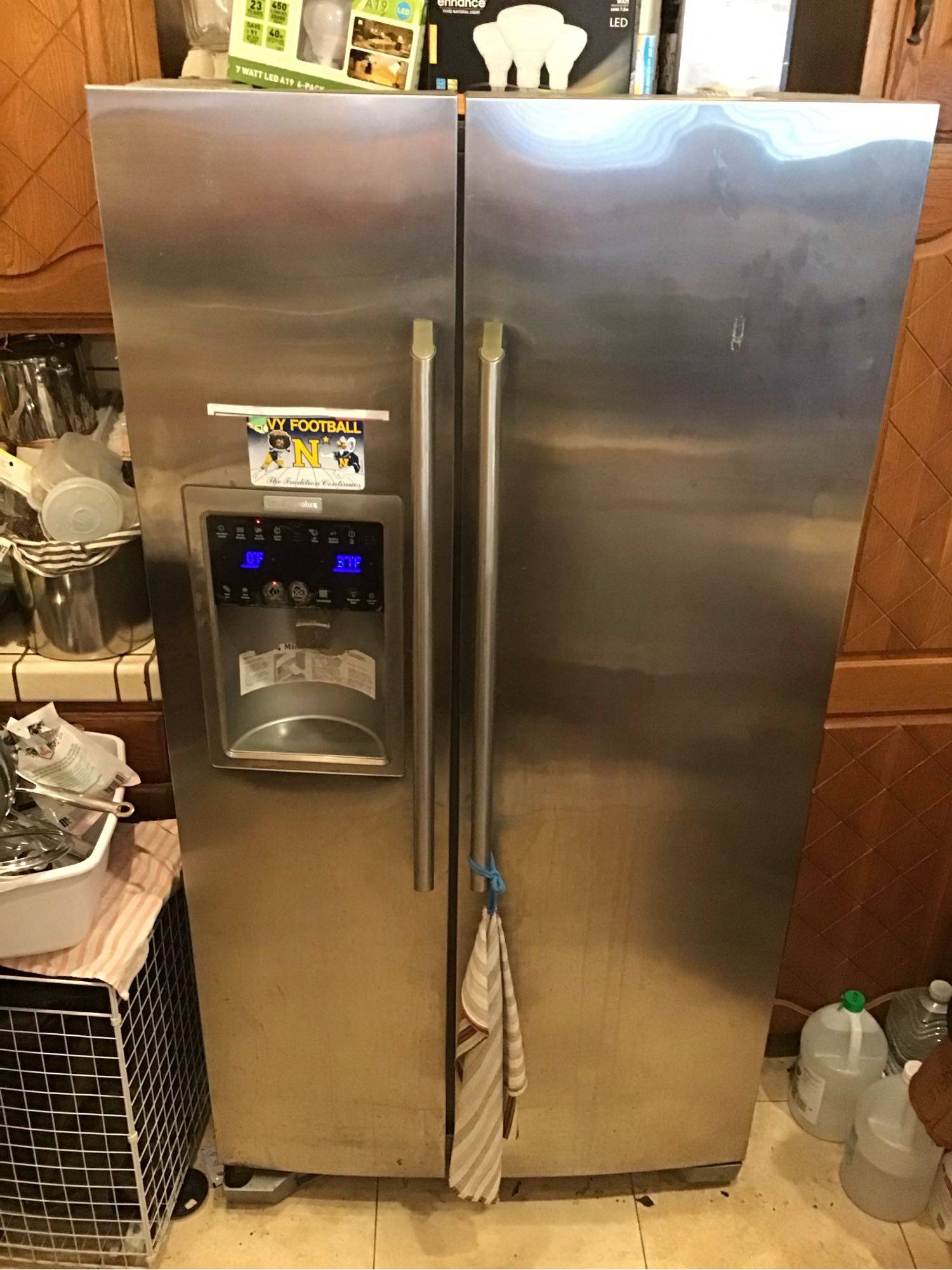
A GE Profile refrigerator that displays a temperature error should be inspected rather than ignored. Temperature warnings, flashing numbers, unusual readings, or error messages can indicate that the refrigerator is no longer receiving accurate temperature information. In many cases, the problem is connected to a temperature sensor, wiring, or the electronic control board. Because these components work together to regulate cooling, a fault can eventually lead to food spoilage or unnecessary compressor operation.
The temperature sensor, often called a thermistor, monitors the temperature inside the refrigerator or freezer compartment. The sensor sends information to the electronic control system, which uses that data to determine when the compressor, evaporator fan, condenser fan, and other components should operate. If the sensor sends an incorrect signal, the refrigerator may display a temperature error or behave as though the compartment is warmer or colder than it actually is.
One common sign of a faulty temperature sensor is a displayed temperature that does not match the actual temperature inside the compartment. For example, the control panel may indicate a normal temperature while food is becoming too warm. In another situation, the refrigerator may continue running for long periods because the control system believes the temperature has not reached the required setting.
A defective thermistor can also cause temperature fluctuations. The refrigerator may cool normally for a while and then become too warm. The freezer can develop similar symptoms, including excessive frost, soft frozen food, or temperatures that change significantly during the day. These symptoms do not automatically prove that the sensor has failed, but they are strong reasons to perform a proper diagnostic inspection.
Before assuming that an electronic component has failed, several basic conditions should be checked. Make sure the refrigerator has adequate airflow around the cabinet and that the condenser area is not heavily covered with dust. Check that the doors close completely and that the door gaskets create a proper seal. A door that remains slightly open can allow warm, humid air into the refrigerator and cause temperature problems that may appear to be related to a sensor.
It is also worth checking whether the refrigerator recently experienced a power interruption. A power surge or unstable electrical supply can affect electronic components and may cause temporary control errors. In some situations, disconnecting the appliance from power for several minutes and restoring power can reset the control system. If the temperature error returns, however, the refrigerator should be professionally diagnosed rather than repeatedly reset.
When a temperature sensor is suspected, a technician can test its resistance and compare the measured value with the manufacturer’s specifications for the current temperature. The wiring harness and connectors should also be inspected. A sensor can appear to be functional while a loose connector, damaged wire, or corroded terminal prevents its signal from reaching the control board correctly.
The electronic control board is another possible source of the problem. This board processes signals from the temperature sensors and controls various refrigerator functions. If the board cannot correctly interpret the sensor signal, it may display an incorrect temperature or activate cooling components at the wrong time.
Control board failures can produce several symptoms at once. The refrigerator may have temperature errors, inconsistent cooling, fans that do not operate correctly, or a compressor that runs excessively. Some controls may become completely unresponsive. Because these symptoms can overlap with mechanical problems, replacing the control board without testing the rest of the system can lead to unnecessary expense.
A technician should also determine whether the refrigerator is actually capable of reaching the selected temperature. If the sensor readings are accurate but the appliance remains warm, the problem may involve another part of the cooling system. Possible causes include a restricted airflow path, evaporator fan failure, condenser fan problems, compressor issues, or a sealed-system problem.
The exact error displayed on a GE Profile refrigerator can provide useful diagnostic information, but the code or warning should be interpreted together with the appliance’s symptoms. Modern refrigerators rely on several electronic and mechanical components working together, so a single displayed warning does not always identify the failed part.
Continuing to operate a refrigerator with a persistent temperature error can create additional problems. Food may be stored at an unsafe temperature, the compressor may run longer than necessary, and excessive frost or condensation may develop. If the appliance is struggling to maintain temperature, avoid relying solely on the display. An appliance thermometer can help determine whether the actual compartment temperature is changing.
Professional diagnosis is especially useful when the refrigerator repeatedly displays an error after a reset, temperatures remain unstable, or the compressor and fans appear to operate abnormally. A qualified appliance technician can inspect the sensor, wiring, control board, airflow, and cooling system to identify the actual cause before recommending a repair.
If your GE Profile refrigerator displays a temperature error, contact San Diego Appliance Repair Center for professional refrigerator diagnostics and repair. A trained technician can determine whether the problem is related to the temperature sensor, electronic control board, wiring, or another cooling-system component and recommend the appropriate repair. Schedule service with San Diego Appliance Repair Center to restore reliable temperature control and keep your refrigerator operating properly.