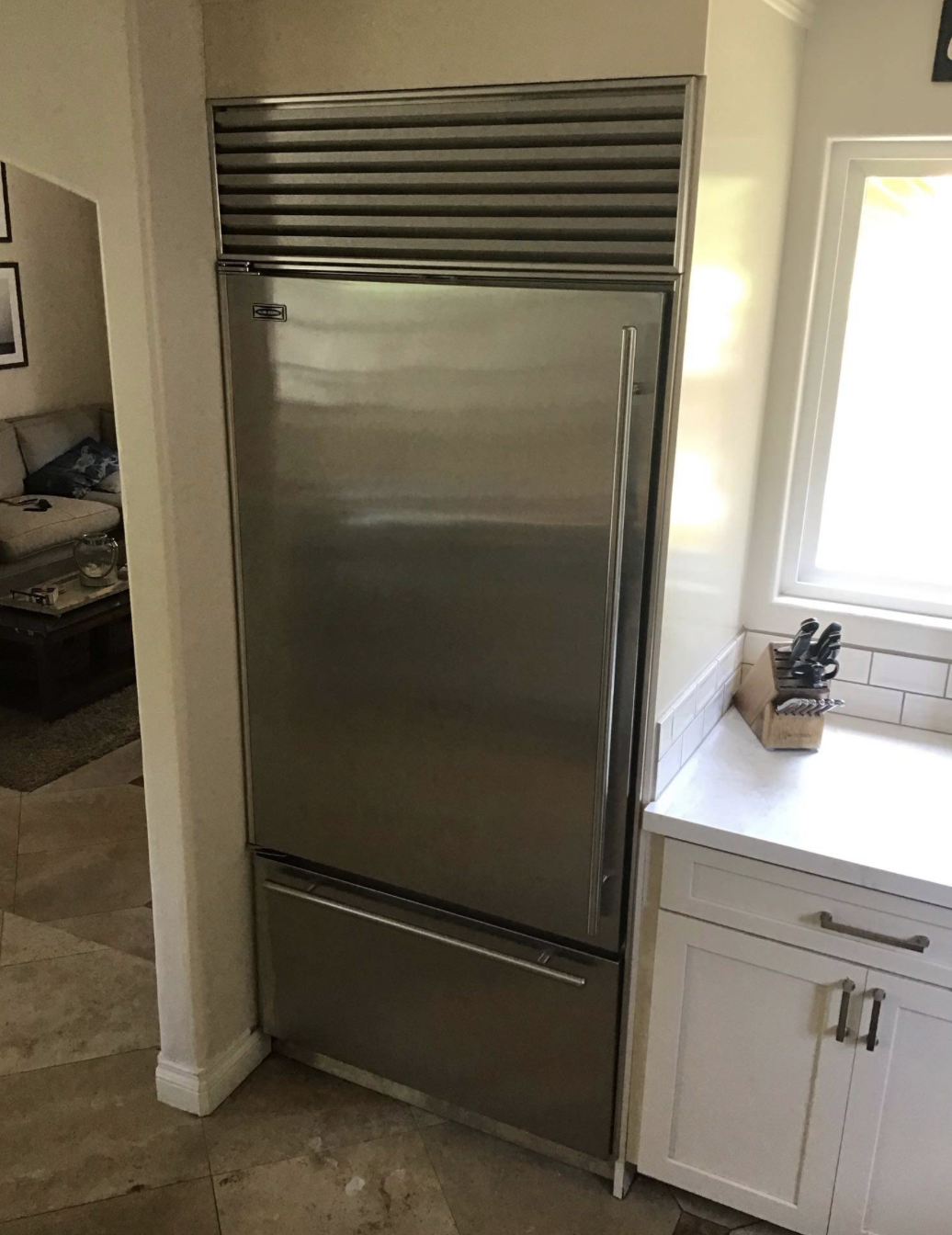
Finding water pooling inside the fresh food compartment of your Whirlpool refrigerator can be frustrating. Whether the water collects under the crisper drawers or spreads across the shelves, this issue should never be ignored. Standing water can damage food, create unpleasant odors, encourage mold growth, and even affect the refrigerator’s cooling performance if left unresolved.
One of the most common causes of water leaking inside a Whirlpool refrigerator is a blocked defrost drain. During the automatic defrost cycle, frost that forms on the evaporator coils melts into water and flows through a small drain hole into a drain tube. The water then travels to a drain pan beneath the refrigerator, where it evaporates naturally. If this drain becomes clogged with food particles, ice, dust, or debris, the water cannot flow away properly. Instead, it backs up and leaks into the fresh food compartment.
Understanding why this happens and knowing when to call a professional can help prevent more serious refrigerator problems.
How the Defrost Drain Works
Modern Whirlpool refrigerators include an automatic defrost system designed to prevent excessive frost buildup. Several times a day, the refrigerator briefly warms the evaporator coils to melt accumulated frost. The melted water follows a simple path:- It drains through a small opening beneath the evaporator.
- It enters the drain tube.
- It flows into the drain pan underneath the refrigerator.
- It evaporates from the heat generated by the compressor.
Signs of a Blocked Defrost Drain
A clogged defrost drain usually produces several recognizable symptoms before causing serious damage. Common signs include:- Water collecting beneath the vegetable drawers
- Small puddles appearing after each defrost cycle
- Ice forming underneath the lower drawers
- Moisture accumulating on refrigerator shelves
- Water leaking from the bottom of the refrigerator door
- Unpleasant odors caused by standing water
What Causes the Drain to Become Blocked?
Several conditions can obstruct the defrost drain.Food Debris
Small food particles may accidentally enter the drain opening over time, gradually reducing water flow.Ice Formation
If the drain freezes shut, melted defrost water cannot escape and instead refreezes around the drain area, creating a larger blockage.Mold and Organic Build-Up
Moist environments encourage mold, slime, and bacterial growth that can partially or completely clog the drain tube.Dust and Dirt
Dust pulled into the refrigerator’s airflow eventually settles inside the drainage system, especially in older units.Why Ignoring the Leak Is Risky
Some homeowners simply wipe away the water every few days without investigating the cause. Unfortunately, this temporary solution allows the underlying problem to worsen. A blocked drain can eventually cause:- Mold growth inside the refrigerator
- Water damage to food packaging
- Damaged shelving or drawer components
- Ice buildup beneath the evaporator
- Reduced cooling efficiency
- Increased compressor workload
- Higher energy consumption
Could Something Else Cause Water Inside the Refrigerator?
Although a clogged defrost drain is one of the most common causes, technicians also inspect other components before making a diagnosis. Other possible causes include:Damaged Drain Tube
A cracked or disconnected drain tube can allow water to escape before reaching the drain pan.Door Seal Problems
If warm air continuously enters through a worn door gasket, excessive frost develops, creating more water during defrost cycles than the drain can handle.Improper Refrigerator Level
A refrigerator that leans forward instead of slightly backward may prevent water from draining correctly.Faulty Defrost System
If the defrost heater, thermostat, or electronic control board malfunctions, abnormal frost accumulation may overwhelm the drainage system. Professional diagnosis ensures the true cause is identified before unnecessary parts are replaced.Why DIY Cleaning Isn’t Always Enough
Some homeowners attempt to clear the drain using hot water, pipe cleaners, or flexible wires. While this occasionally removes a simple blockage, improper cleaning may damage delicate plastic components inside the drain tube. Using excessive force can puncture the drain tube or push debris deeper into the system, creating a larger obstruction that requires more extensive repairs. If the drain repeatedly freezes or clogs after cleaning, another underlying issue is likely present.How Professional Technicians Solve the Problem
Experienced appliance technicians follow a complete diagnostic process rather than addressing only the visible symptoms. Professional service typically includes:- Inspecting the defrost drain opening
- Clearing internal blockages
- Cleaning the entire drain tube
- Checking for ice buildup
- Inspecting the evaporator compartment
- Testing the defrost heater
- Verifying thermostat operation
- Examining electronic controls
- Inspecting door gaskets
- Confirming proper refrigerator leveling
Preventing Future Drain Blockages
Although normal wear cannot always be avoided, several maintenance habits reduce the likelihood of future drainage problems. Helpful prevention tips include:- Clean refrigerator shelves regularly.
- Wipe up spills promptly.
- Avoid blocking interior air vents.
- Keep food containers tightly sealed.
- Inspect door seals periodically.
- Schedule preventive refrigerator maintenance every year.
When to Schedule Service
You should arrange professional service if:- Water repeatedly appears beneath the drawers.
- Ice continues forming inside the refrigerator.
- The refrigerator leaks after every defrost cycle.
- Cooling performance begins changing.
- You notice recurring moisture despite cleaning.
- Water reaches the kitchen floor.