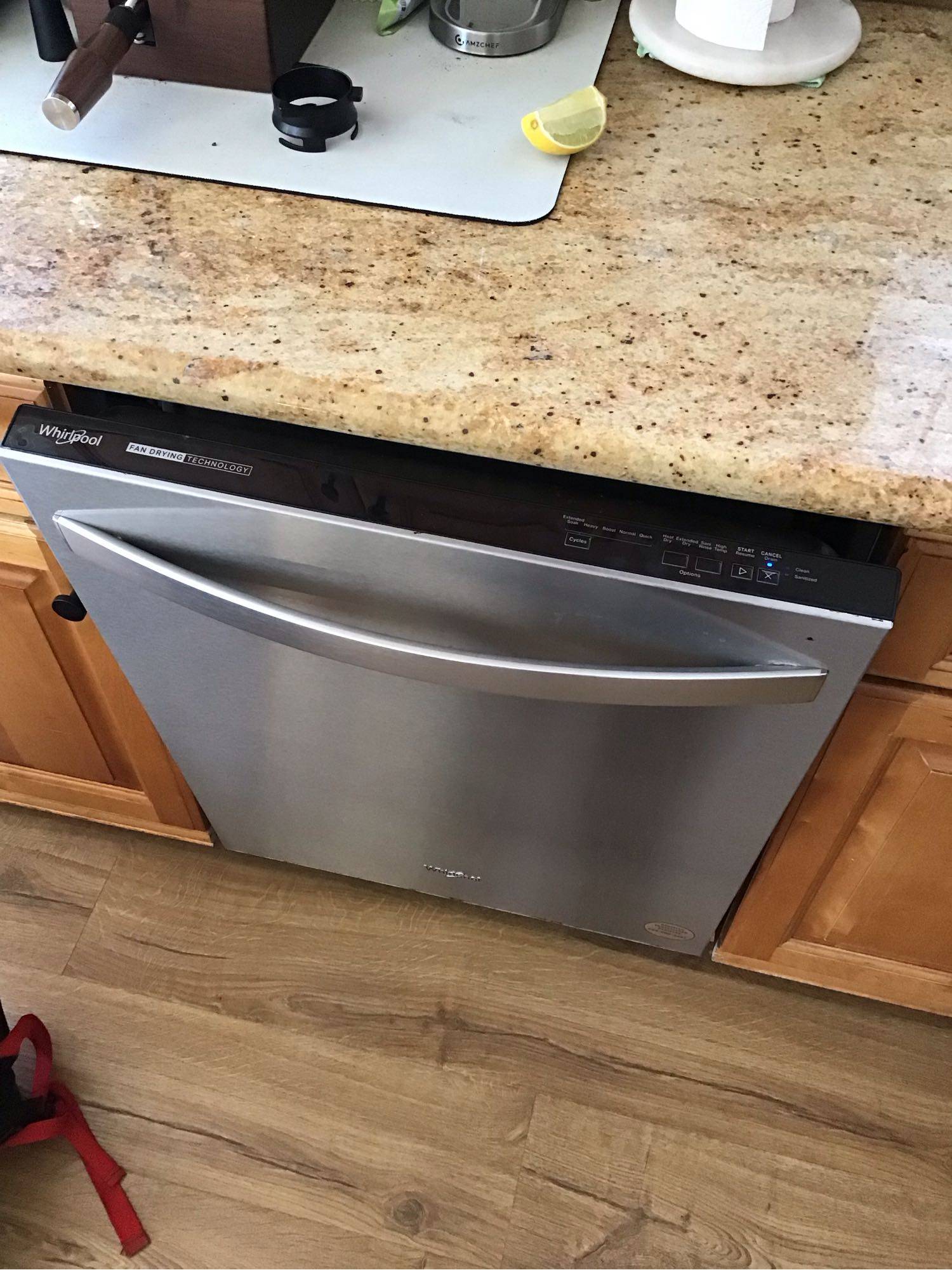
When a dishwasher completes a full cycle without obvious errors but dishes remain with food residue, grease film, or cloudy stains, the problem is usually not electrical or cosmetic. In most cases, the issue develops inside the water circulation system, where pressure, flow distribution, and spray coverage determine how effectively the load is cleaned.
A dishwasher can sound completely normal while still underperforming. That is because pumps and motors may continue operating, but the hydraulic balance inside the system is already disrupted. The result is weak or uneven water delivery to the spray arms.
Reduced pump efficiency
The circulation pump is responsible for pushing water through the spray arms at sufficient pressure. Over time, impeller wear, partial blockage, or internal scaling can reduce its efficiency without changing the sound of operation. In early stages, the motor still spins normally, which creates the impression that everything is fine. However, the water volume and pressure reaching the wash arms decrease. This leads to poor detergent distribution and incomplete soil removal, especially on upper racks.Blocked or partially obstructed spray arms
Spray arms rely on small nozzles that rotate using water pressure. Even minor blockages from food particles, mineral deposits, or broken glass fragments can disrupt their movement. A common situation is uneven rotation. One arm may spin freely while another barely moves. Since coverage becomes inconsistent, some areas of the load receive strong jets while others receive almost none. This creates a pattern where some dishes appear clean and others remain visibly dirty, even within the same cycle.Filter system overload
Dishwashers depend heavily on filters that trap food debris before it reaches the pump. When these filters are not cleaned regularly, water circulation becomes restricted. At first, the machine compensates by extending cycles or adjusting internal flow. Eventually, the restriction becomes significant enough to reduce cleaning performance. The appliance still operates quietly, but water movement inside the chamber is no longer strong enough to remove hardened residue.Air trapped in the system
Air pockets inside the circulation loop can interfere with steady water flow. This often happens after maintenance, improper installation, or partial clogging in the intake line. Air reduces hydraulic pressure and creates inconsistent spray intensity. The dishwasher may sound unchanged, but the actual cleaning force fluctuates throughout the cycle. The result is uneven cleaning quality across different racks.Water inlet restrictions
Even when the pump works correctly, insufficient water supply affects the entire cleaning process. A partially closed inlet valve, kinked hose, or clogged inlet filter reduces the volume of water entering the system. The dishwasher may still fill and start normally, which makes the issue less obvious. However, the reduced water level limits circulation efficiency. Spray arms operate under lower pressure, and detergent does not dissolve or distribute properly.Detergent interaction problems caused by weak flow
Circulation issues also affect how detergent behaves inside the chamber. When water pressure is weak, detergent may not fully dissolve or may settle in one area instead of circulating evenly. This leads to a combination of residue buildup, cloudy glassware, and greasy plates. In many cases, users mistakenly switch detergents or increase dosage, which does not solve the underlying mechanical issue.Early signs that are often ignored
Most circulation problems develop gradually. Before full cleaning failure occurs, there are subtle indicators:- Dishes feel slightly greasy after normal cycles
- Upper rack items remain dirtier than lower ones
- Glassware becomes cloudy despite rinse aid
- Cycle time remains normal, but results decline