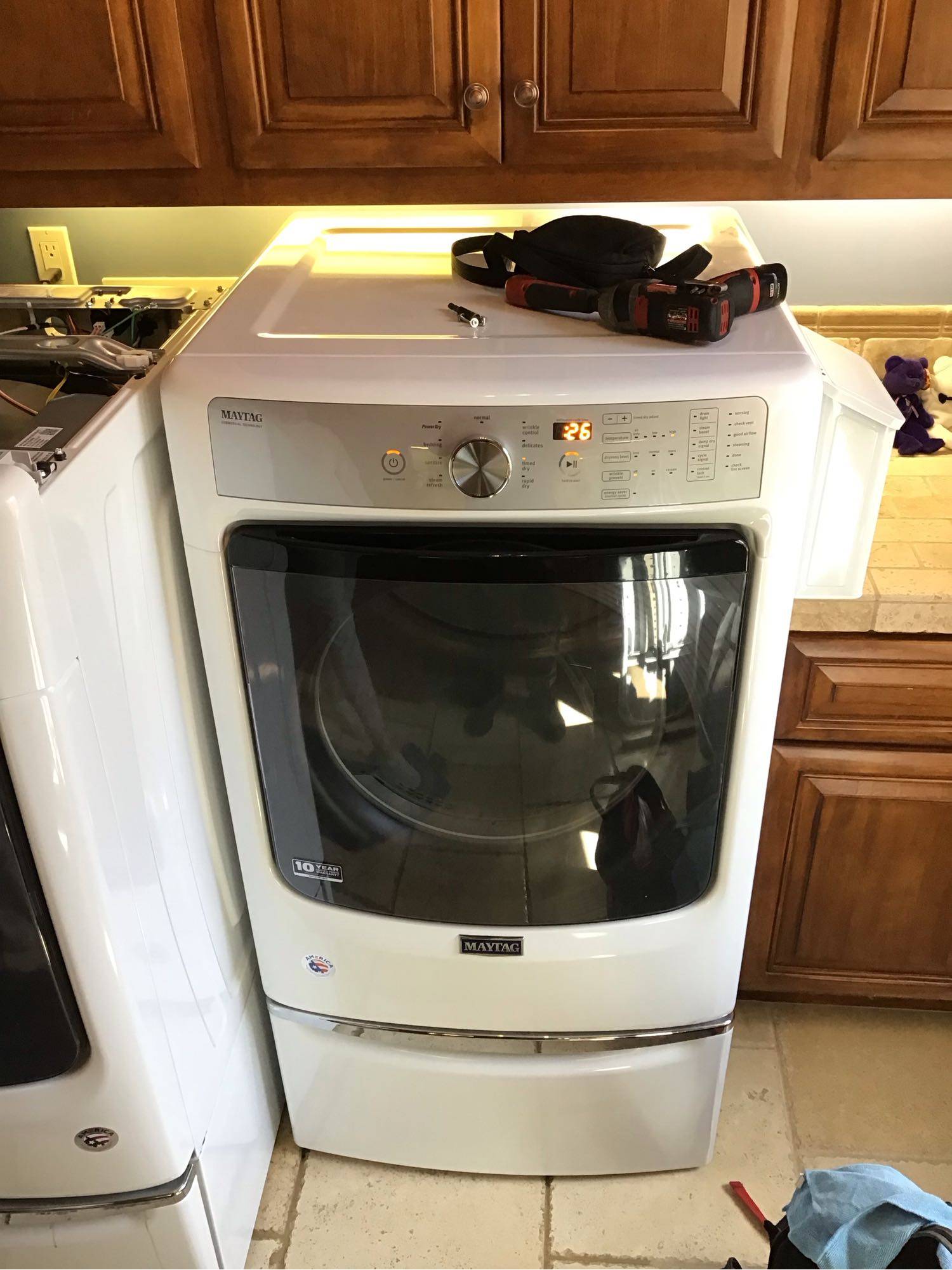
A washing machine that runs quietly with light laundry but starts knocking once the drum is filled closer to capacity is showing a pattern that usually points to mechanical stress inside the support system. The key detail here is not the sound itself, but when it appears. If the noise is tied directly to heavier loads, the issue is often connected to how the drum is held in place and how it behaves under increased weight during rotation.
Inside every washing machine, the drum is suspended and stabilized by a system of bearings, shock absorbers, springs, or support arms depending on the model. These components are designed to keep the drum centered even when wet clothes become unevenly distributed. When they begin to wear out, the system can still function under light conditions, but it loses stability when the load increases.
One of the most common causes is suspension fatigue. The suspension rods or springs gradually lose tension over time. As a result, the drum starts to drop slightly lower than its designed position when it is heavily loaded. During rotation, especially in the spin cycle, this imbalance creates a knocking sound as the drum shifts and hits against internal structural limits.
Another possible source is worn shock absorbers. These parts control the movement of the drum during spinning. When they weaken, the drum does not absorb movement smoothly. Instead, it rebounds more aggressively when the load is uneven or heavy, which produces repeated knocking or thumping sounds.
Drum support bearings can also contribute to the problem. When bearings begin to wear, they allow extra lateral movement. With a light load, this movement may remain unnoticed. With heavier laundry, however, the increased mass amplifies the imbalance, making the sound more noticeable and more frequent.
In some cases, the issue is not a single failed part but a combination of early wear across multiple support elements. A machine that has been in use for several years may still operate normally under minimal stress, yet reveal structural fatigue only when pushed closer to its load limit.
It is important to distinguish between operational noise caused by load distribution and mechanical knocking caused by worn parts. Uneven loading, such as placing a single heavy item like a blanket or towels on one side of the drum, can also create temporary knocking. However, if the sound repeats consistently even when loads are balanced, the problem is likely mechanical rather than user-related.
Ignoring this type of symptom can lead to accelerated damage. Continued operation with weakened suspension or support components places additional stress on the motor coupling, outer tub, and mounting frame. Over time, this can increase repair complexity and cost.
A proper inspection typically includes checking suspension rods for elasticity loss, testing shock absorbers for resistance, and examining drum play for excessive movement. In some cases, partial disassembly is required to confirm whether bearings or mounting brackets are contributing to instability.
Addressing the issue early helps prevent secondary damage and restores stable operation under full load conditions. In most situations, replacing worn suspension components or shock absorbers resolves the knocking completely and returns the machine to normal performance.
For a precise diagnosis and repair of washing machine noise under heavy load conditions, professional assessment is recommended. Contact the San Diego Appliance Repair Center for service and inspection before the issue develops into a more serious mechanical failure.