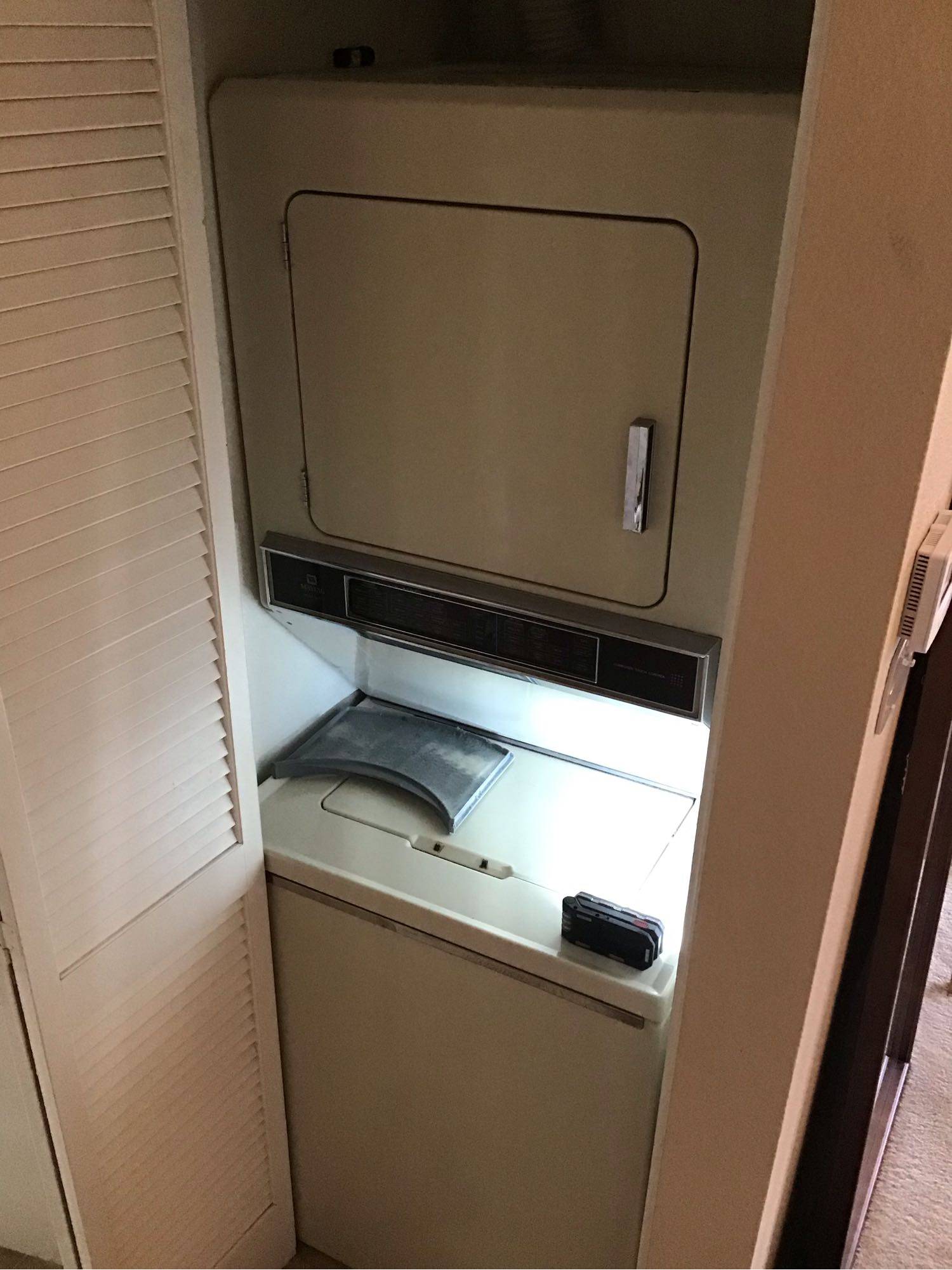
A loud banging noise that appears only during the final stage of spinning usually points to a mechanical imbalance rather than a random fault. At this point in the cycle the drum reaches high speed, and even small irregularities become amplified. If the sound repeats consistently near the end of every wash, the issue is likely tied to the way the drum is supported or how the load is distributed.
One of the most common causes is worn suspension components. Washing machines rely on shock absorbers or dampers to stabilize the drum during rapid rotation. Over time these parts lose elasticity or develop play. When that happens, the drum begins to move excessively inside the housing during deceleration. The result is a heavy knocking sound as it hits the internal frame or shifts abruptly when the spin slows down.
Another frequent source is imbalance in the drum assembly itself. This can happen even when laundry is loaded correctly. A slightly bent drum spider arm, uneven wear of bearings, or loosened mounting points can create uneven rotation. During the last phase of spinning, when the machine transitions from high speed to a stop, that imbalance becomes more noticeable and produces a strong impact-like noise.
Laundry distribution also plays a role. If heavy items such as towels, bedding, or jeans gather on one side of the drum, the machine struggles to maintain balance. Most modern washers attempt to correct this automatically by redistributing the load, but if the suspension system is already weakened, the correction fails and the drum starts striking the cabinet.
Worn drum bearings can also contribute to the issue. Although bearing failure typically produces a continuous rumbling sound, in early stages it may only become obvious under high load or during deceleration. As the drum slows down, lateral movement increases, creating a sharp knock or bang at the end of the cycle.
Less obvious but still possible causes include loose counterweights or mounting bolts. Concrete counterweights are fixed to stabilize the machine during spin. If even one of them becomes loose, the balance shifts significantly. The noise in that case tends to be more abrupt and metallic.
Ignoring this type of symptom often leads to progressive damage. What begins as a minor imbalance can evolve into bearing failure, drum deformation, or damage to the outer tub. Continued use under these conditions increases repair costs and reduces the lifespan of the appliance.
A proper inspection usually involves checking suspension rods, testing drum movement by hand, evaluating bearing resistance, and confirming that all mounting points are secure. In many cases, the problem is not visible from the outside and requires partial disassembly to identify accurately.
When the issue is related to suspension or internal balance, replacement of worn components restores normal operation. If the bearings or drum spider are affected, repair becomes more complex but still manageable if addressed early. Delaying service increases the likelihood of full drum assembly replacement.
A washing machine should complete its cycle with stable, controlled movement. Any strong impact noise at the end of spinning is a signal that the internal support system is no longer absorbing motion properly.
For accurate diagnosis and repair, it is recommended to contact a professional technician who can evaluate the condition of the drum system and replace worn components before further damage occurs.
Order diagnostics and repair services from the San Diego Appliance Repair Center.