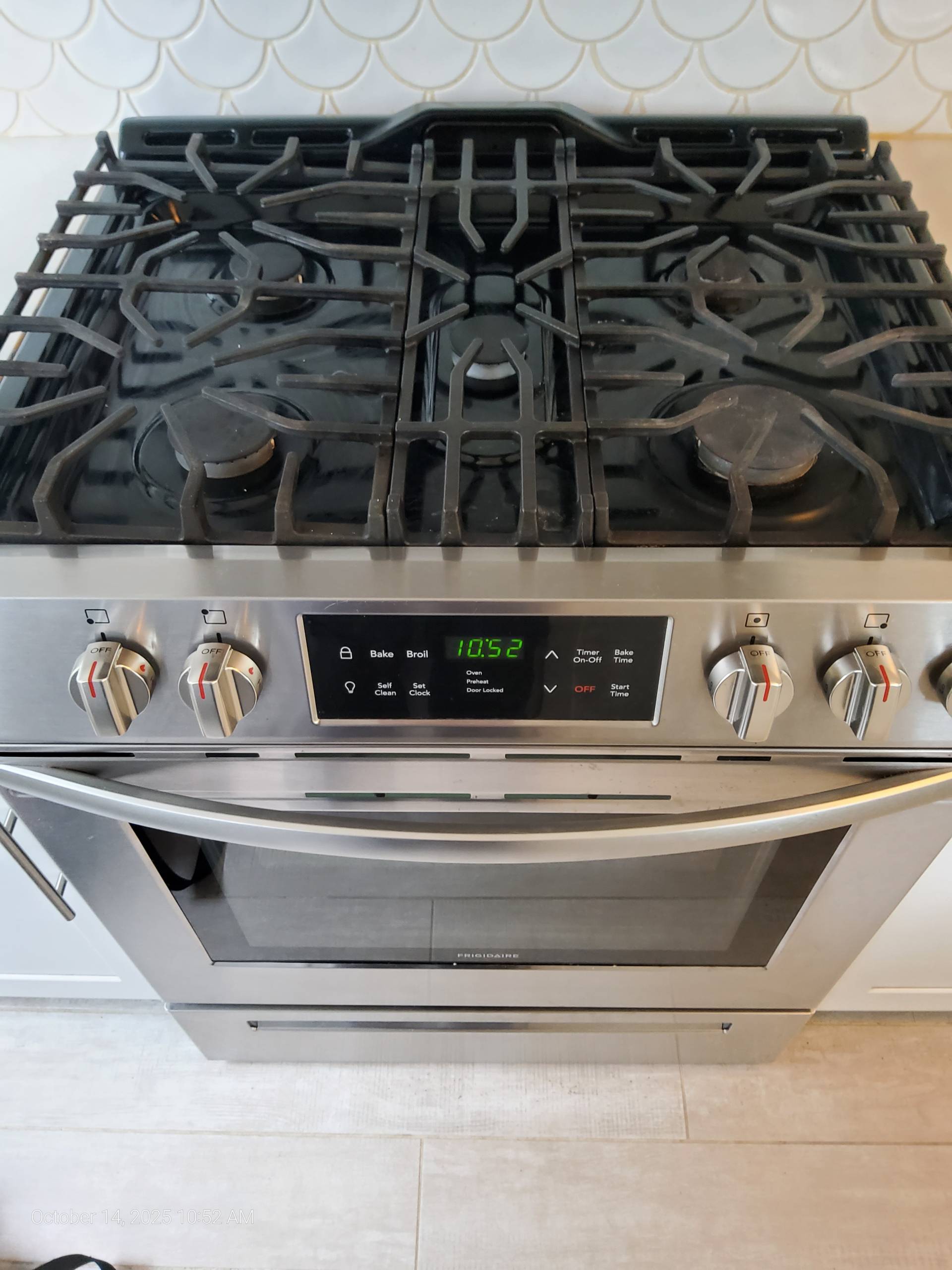
A gas burner can look perfectly normal and still distribute heat unevenly across cookware. The flame stays steady, ignition is consistent, and there is no visible pulsing or lifting. Yet pans heat slower in one zone, water boils off-center, and frying results become inconsistent. This pattern usually points to how gas is delivered and mixed rather than how the flame appears on the surface.
Most users judge burner performance by flame shape and color. That approach misses issues hidden deeper in the system: inside the burner head, gas jets, air intake channels, and pressure regulation path. Even small deviations in these areas affect how evenly heat spreads across the bottom of a pot or pan.
How uneven heating develops
A gas burner works through a controlled mix of fuel and air. Gas exits through small jets, draws in primary air through the venturi tube, and ignites at the burner ports. If this mixture is slightly inconsistent across the ring, combustion remains stable overall, but heat output varies from one side of the burner to another. The flame can still look steady because the total gas flow is unchanged. What changes is the balance between gas velocity, oxygen supply, and port-level distribution.Partial clogging inside burner ports
One of the most common hidden causes is uneven micro-blockage in burner holes. Grease vapor, detergent residue, and food particles gradually narrow some ports more than others. The flame continues to burn, but sections of the ring release less energy. This creates a situation where one side of the cookware receives a stronger thermal load while another side lags behind. The difference may be subtle at first, becoming more noticeable during simmering or frying where uniform heat matters more. Cleaning the surface ring often does not fully resolve this, since deposits can form deeper inside the burner head where routine wiping cannot reach.Burner cap alignment issues
A slightly misaligned burner cap can redirect gas flow without changing flame stability. If the cap does not sit perfectly centered, gas escapes unevenly through the ports. The flame pattern remains continuous, but energy distribution shifts toward one side. This issue is often intermittent. The burner may work normally after cleaning or reassembly, then gradually shift again after repeated heating cycles expand and contract the metal components.Gas pressure inconsistencies
Stable flame does not always mean stable pressure. A partially failing regulator or a fluctuating supply line can maintain combustion while altering output distribution across burners. When pressure drops slightly, weaker sections of the burner ring are affected first. This does not always extinguish the flame; instead, it reduces intensity in certain zones. The result is uneven cookware heating even though the flame ring remains visually complete. In multi-burner systems, this can become more noticeable when several burners operate simultaneously, drawing from the same supply line.Air intake imbalance in the venturi system
The venturi tube mixes gas with air before ignition. If airflow is restricted on one side due to dust buildup or partial obstruction, the gas-air mixture becomes inconsistent around the burner circumference. Some sections then burn slightly richer or leaner than others. A rich mixture produces a softer, slower flame, while a lean mixture burns hotter and more concentrated. This imbalance does not necessarily destabilize the flame, but it changes heat intensity across the cookware base.Uneven cookware contact and heat spread
Not all uneven heating originates in the burner itself. Cookware shape and material play a role in how heat is absorbed and distributed. Thin aluminum pans react quickly to localized heat differences, while heavier stainless steel or cast iron can mask small burner inconsistencies. If the pan base is slightly warped or not fully flat, it can exaggerate burner irregularities, creating the impression of a gas distribution issue when the root cause is thermal contact.Internal manifold or jet wear
Gas jets and manifold channels control flow precision. Over time, microscopic wear or residue buildup can alter flow rates between different sections of the burner head. Even small variations affect how evenly gas exits the ring. Unlike complete blockages, wear-related imbalance does not stop combustion. It simply changes output distribution enough to affect cooking consistency while keeping the flame visually normal.Environmental factors that influence combustion
Drafts, hood suction strength, and nearby airflow can subtly affect one side of a burner more than the other. Strong extraction systems may pull flame slightly toward one direction, shifting heat concentration without obvious visual instability. In compact kitchens, this effect becomes more noticeable when burners are placed near ventilation inlets or open windows.How to approach diagnosis
Identifying the source of uneven heating requires isolating variables rather than relying on visual inspection alone. A useful approach is to observe how the burner behaves under controlled conditions:- Test with different cookware sizes and materials
- Rotate the pan and observe whether the cold zone follows the burner or stays fixed
- Compare performance between burners on the same stove
- Check burner cap seating after cooling, not immediately after use
- Observe flame distribution from a low-angle view to detect subtle asymmetry