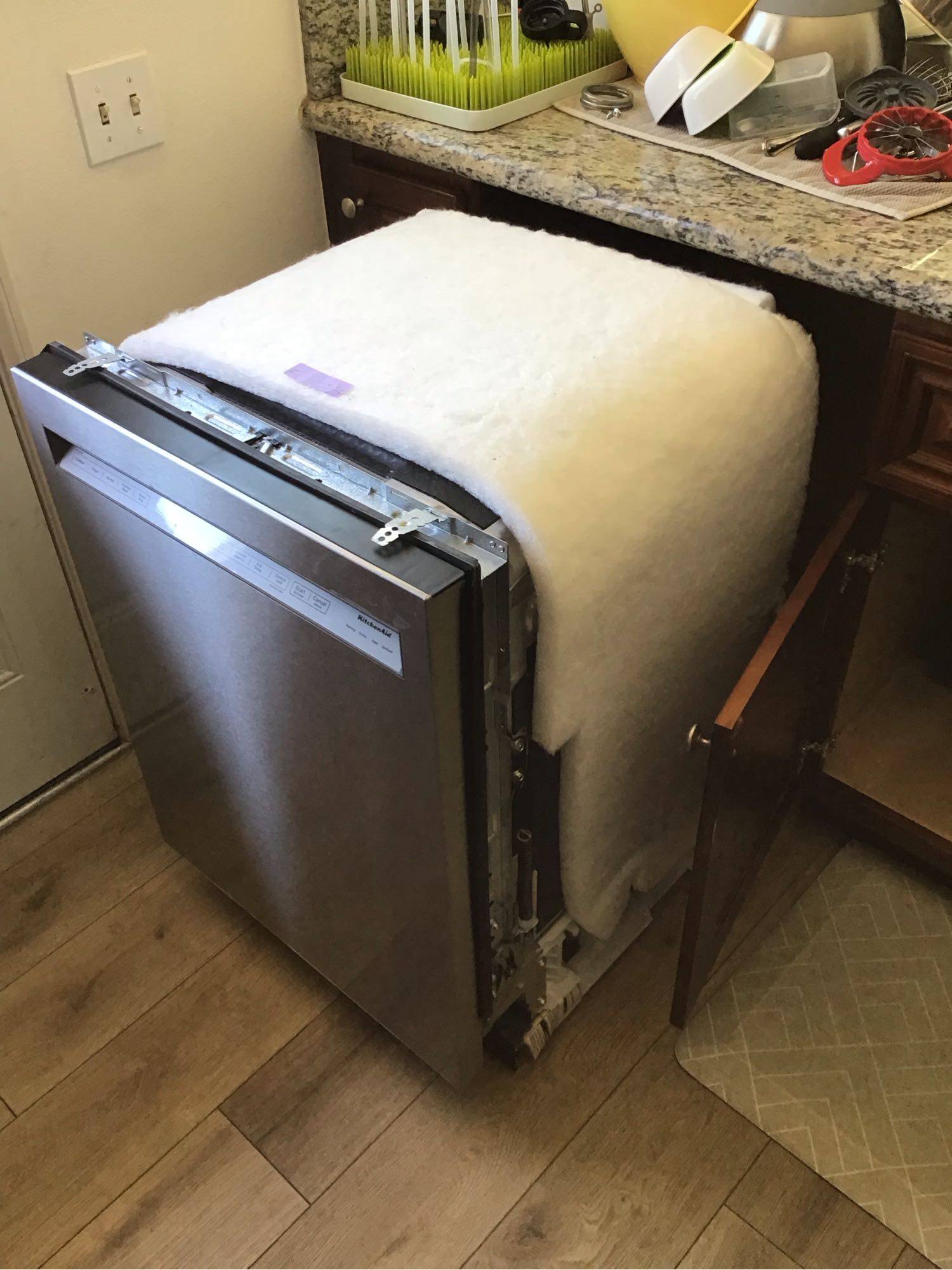
A KitchenAid dishwasher that leaves the detergent tablet partially or completely intact can make an otherwise normal wash cycle ineffective. You may open the dishwasher after a full cycle and find the tablet sitting in the dispenser, stuck to the bottom of the tub, or only partly dissolved. Dishes may also come out with food residue, cloudy surfaces, or greasy spots. Several problems can cause this symptom. The detergent dispenser may not be opening correctly, the water may not be reaching the required temperature, or restricted water circulation may prevent the tablet from dissolving properly. Identifying the cause is important because replacing the dispenser will not solve a heating problem, and changing detergent will not fix a mechanical failure.

Check the Detergent Dispenser

The dispenser is one of the first components to inspect. During the wash cycle, the dishwasher should release the detergent at the appropriate point. If the dispenser door remains closed, the tablet may never come into contact with enough water to dissolve. A blocked or damaged dispenser can prevent normal operation. Detergent residue can build up around the door, spring, latch, or surrounding compartment. If the dispenser is overloaded or a large dish blocks its door, the tablet may also remain trapped inside. Before starting another cycle, make sure the dispenser area is clean and that no dishes are positioned directly in front of it. If the dispenser door does not open during a cycle, the dispenser mechanism may require inspection or replacement.

Water Temperature Can Affect Detergent Dissolving

Dishwasher detergent tablets are designed to dissolve in hot water. If the incoming water is too cold or the dishwasher is unable to heat the water properly, the tablet may remain partially intact. A faulty heating element is one possible cause. Depending on the model and failure, the dishwasher may continue running even when the water does not reach the appropriate temperature. This can result in poor cleaning performance and undissolved detergent. A temperature sensor or thermostat problem can create similar symptoms. These components help the dishwasher monitor water temperature and control the heating process. If the sensor sends incorrect information to the control system, the dishwasher may not heat the water as expected.

Look at the Spray Arms

Proper water circulation is also necessary for dissolving a detergent tablet. The spray arms distribute pressurized water throughout the dishwasher and help direct water toward the detergent dispenser. If the spray arms are clogged with food particles or mineral deposits, water flow can become restricted. A spray arm may also have difficulty rotating if it is blocked by dishes or damaged. Remove the spray arms when possible and check the openings for visible debris. Make sure they can rotate freely and are not obstructed by large plates, pans, or utensils. A circulation pump problem can also reduce water pressure inside the tub. If the pump is not moving enough water, the dishwasher may fill normally but fail to wash effectively or dissolve detergent completely.

Check for Low Water Supply

Insufficient water inside the dishwasher can contribute to poor detergent performance. A partially closed water supply valve, restricted inlet hose, or malfunctioning water inlet valve can limit the amount of water entering the appliance. When the dishwasher does not receive enough water, the wash system may not operate under normal conditions. You may notice weak spray pressure, poor cleaning results, or unusual sounds during the wash cycle. Because several components affect the water supply, a technician may need to test the inlet valve, water pressure, and related parts to determine whether the dishwasher is receiving the correct amount of water.

Detergent and Loading Problems

Sometimes the dishwasher itself is functioning correctly. The detergent tablet may be affected by moisture, age, or improper storage. If tablets are exposed to humidity, they can become harder and may not dissolve as expected. Store detergent according to the manufacturer’s recommendations and keep it away from moisture. Also check that the tablet is placed correctly inside the dispenser rather than simply dropped into the bottom of the dishwasher unless the specific detergent and dishwasher instructions allow that method. Loading also matters. Tall cookware, cutting boards, or large plates can block the dispenser door or spray pattern. Arrange dishes so the dispenser can open freely and water can reach the entire tub.

When the Control System May Be Involved

The electronic control system coordinates several functions during a dishwasher cycle, including the dispenser, heating system, water inlet, circulation, and timing. If the control board does not send the appropriate signal to the dispenser or heating system, the dishwasher may complete a cycle while still leaving detergent behind. However, a control board should not be replaced based on symptoms alone. Other components should be tested first because a faulty dispenser, heating element, sensor, or wiring connection can produce similar results.

When Professional Service Is Recommended

If your KitchenAid dishwasher repeatedly leaves detergent tablets undissolved after you have checked the dispenser and loading arrangement, professional diagnosis can help identify the actual cause. A technician can inspect the dispenser mechanism, heating system, temperature sensor, spray arms, circulation pump, water inlet components, wiring, and control system. Testing these parts can prevent unnecessary replacement and help restore proper cleaning performance. Continuing to run the dishwasher without addressing the problem can lead to consistently poor cleaning results and detergent residue inside the appliance. If your KitchenAid dishwasher is not dissolving detergent tablets, contact San Diego Appliance Repair Center for professional dishwasher service. A qualified technician can diagnose the problem and determine which component needs attention. Schedule appliance repair with San Diego Appliance Repair Center and get your KitchenAid dishwasher back to proper operation.