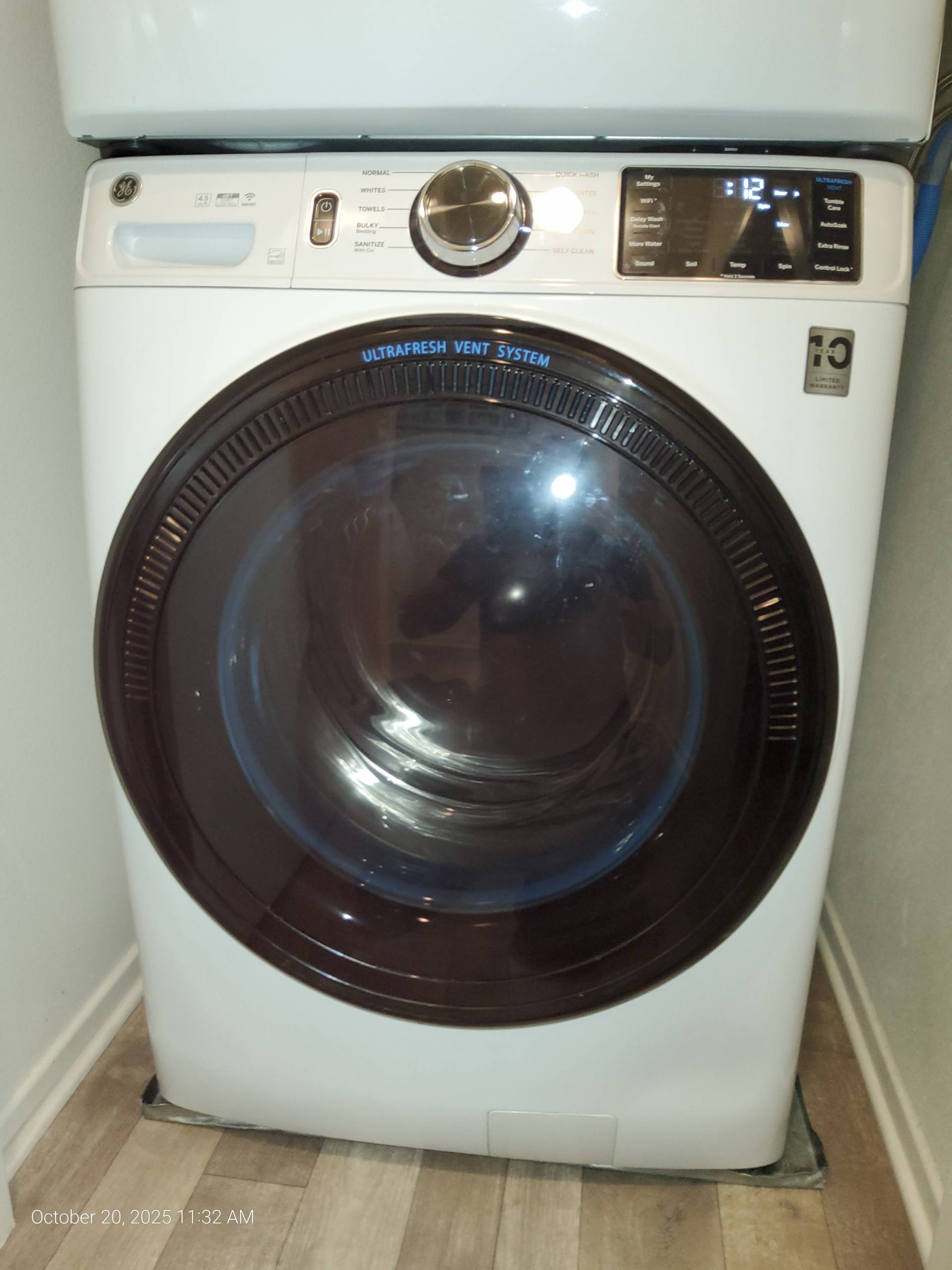
A washing machine can complete a full cycle, reach high spin speed, and still leave laundry noticeably wet. The drum rotates normally, the program ends without errors, yet clothes come out heavier than expected. This usually creates the impression of a spin motor issue, while the real limitation often sits in the drainage system.
Spin drying depends on a balance between mechanical force and water removal. The drum extracts moisture from fabrics, but that water must be cleared quickly through the pump and hose. When drainage slows down, spinning loses efficiency even if rotation speed stays unchanged.
How the spin cycle is meant to function
During the final stage, the drum reaches high speed to force water out of textiles. That water is then pushed into the drainage system and expelled from the machine. When both processes work correctly, fabrics exit damp but not saturated. If water removal lags behind extraction, moisture remains inside the drum. Clothes continue to absorb it instead of drying, which results in consistently wet laundry despite a completed cycle.Drain filter restriction and gradual blockage
One of the most frequent causes is a partially clogged drain filter. Lint, hair, coins, and detergent residue accumulate over time and narrow the water passage. The machine may still drain, but at a reduced rate. This slows the entire spin process because water remains in the system longer than intended. Even a small restriction can affect final moisture levels in clothes. Since buildup develops gradually, users often adapt to declining performance without noticing the root cause.Drain pump weakening or partial obstruction
The pump is responsible for actively pushing water out of the washer. When it becomes worn or partially obstructed, drainage speed drops. This condition does not always trigger errors. The pump still operates, but with reduced efficiency. As a result, water remains in the drum during the spin phase, limiting how dry fabrics can become. Heavy loads make the issue more visible because the pump cannot keep up with higher water volume.Hose restrictions and installation problems
The drain hose is a simple but critical part of the system. If it becomes kinked, twisted, or partially blocked, water flow is restricted. Even minor bends behind the machine can slow drainage enough to affect spin results. Because the restriction is external and partial, the washer continues operating normally, which makes diagnosis less obvious. This issue often appears after moving the appliance or adjusting its position in tight spaces.Load imbalance reducing spin efficiency
Uneven distribution of laundry inside the drum affects how effectively the machine can reach and maintain high-speed rotation. When clothes clump on one side, the washer may reduce spin intensity to protect internal components. This limits centrifugal force and leaves more water in fabrics. Large items such as towels, bedding, or mixed fabric loads increase the likelihood of imbalance and weaker spin performance.Residual water inside the system
Even when drainage works correctly, small amounts of water can remain in the pump housing or lower parts of the machine. If this residual water is not fully cleared, it can interfere with the next cycle or reduce overall efficiency. Over time, it also contributes to humidity inside the appliance, which may lead to odor formation or minor internal degradation.Why no error codes appear
Most modern washing machines are programmed to detect only major faults such as complete pump failure or total blockage. Partial restrictions or slow drainage often remain within acceptable operating limits for the system. As a result, the machine completes cycles without warnings even while performance declines. This makes the issue difficult to identify without close observation.Early indicators of drainage-related spin issues
Before laundry becomes consistently wet, several subtle signs may appear:- clothes feel heavier after spin cycles
- spin phase runs longer than usual
- small amounts of water remain visible in the drum
- towels and thick fabrics dry poorly compared to light items
- occasional damp odor appears after washing