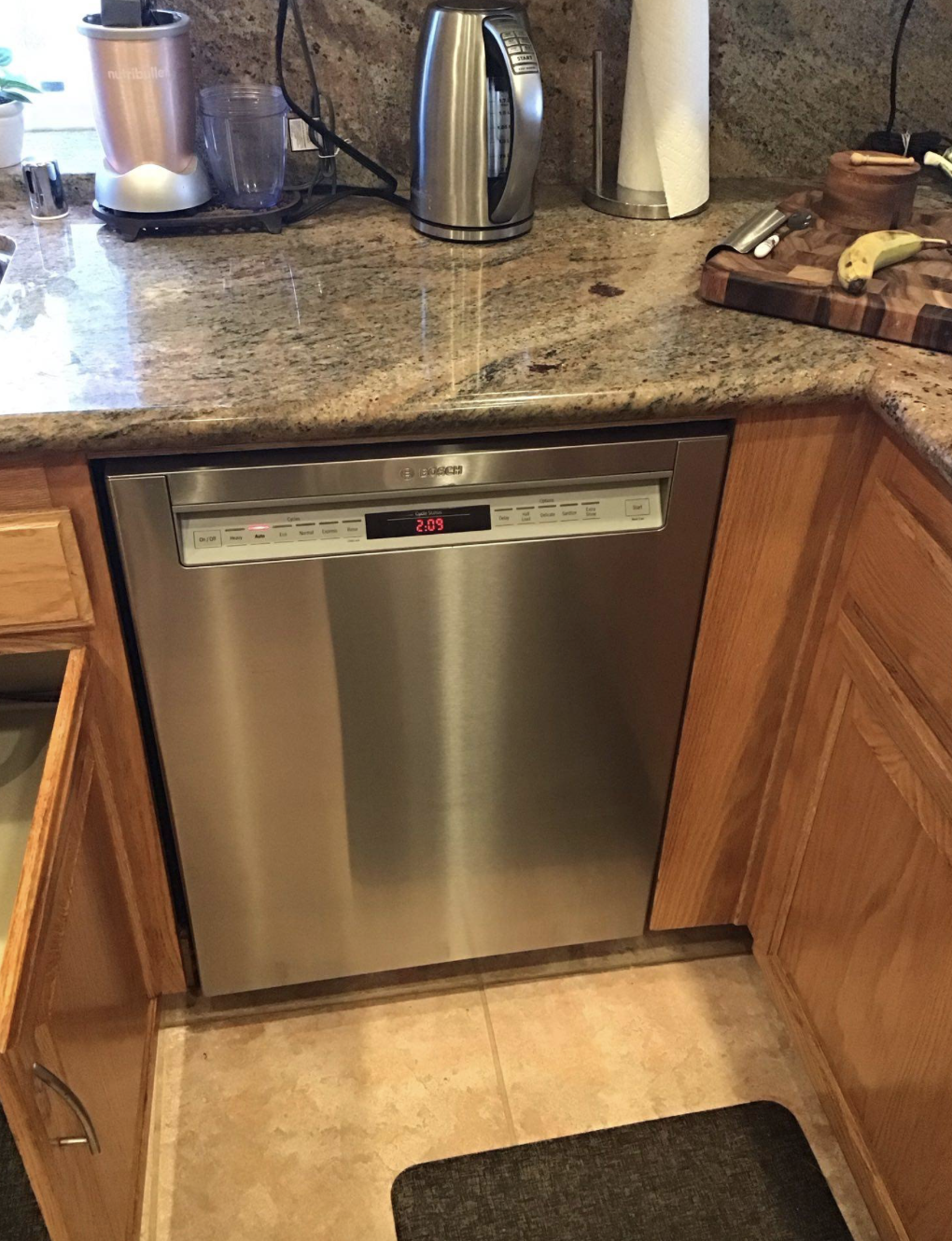
A dishwasher is supposed to make life easier by delivering spotless dishes with minimal effort. When your Maytag dishwasher leaves food particles on dishes, it defeats the purpose of using the appliance in the first place. Finding bits of rice, vegetables, grease, or dried residue on plates after a completed wash cycle is frustrating and often indicates that something inside the dishwasher is no longer working as intended.
Although loading techniques and detergent choice can affect cleaning performance, persistent food residue usually points to mechanical issues. Two of the most common causes are a failing wash pump and problems within the filter system. Understanding these components can help you identify the problem before it becomes more expensive to repair.
Why Does a Maytag Dishwasher Leave Food on Dishes?
During every wash cycle, your dishwasher relies on high-pressure water circulation to remove food residue from dishes. Water is pumped through the spray arms, loosened debris is filtered out, and dirty water is drained away. If any part of this process is interrupted, food particles can remain on dishes instead of being washed away. Common causes include:- Worn or damaged wash pump
- Clogged or dirty filter system
- Blocked spray arms
- Low water pressure
- Faulty circulation motor
- Improper water temperature
- Overloaded dishwasher
- Damaged spray arm bearings
Wash Pump Problems
The wash pump is one of the most important components in your Maytag dishwasher. It generates the water pressure needed to rotate the spray arms and thoroughly clean every rack. When the wash pump begins to fail, water pressure decreases significantly. Symptoms of a failing wash pump include:- Food remaining on dishes after every cycle
- Weak spray arm movement
- Poor cleaning on the upper rack
- Humming or grinding noises
- Longer wash cycles
- Water not circulating properly
Filter System Problems
Modern Maytag dishwashers use filters to capture food particles before water is recirculated. When these filters become clogged, dirty water continues circulating through the dishwasher, redepositing food onto dishes. Signs of a clogged filter include:- Visible food particles after washing
- Dirty water pooling inside
- Unpleasant odors
- Longer cycle times
- Reduced cleaning performance
Spray Arms May Be Blocked
Even if the pump is functioning correctly, clogged spray arm holes can prevent water from reaching dishes. Food particles, hard water deposits, and mineral buildup can block the tiny openings that create high-pressure spray. Common signs include:- Certain dishes always come out dirty
- Lower rack cleans better than upper rack
- White mineral deposits on spray arms
- Spray arms fail to rotate freely
Water Temperature Matters
Dishwashers perform best when incoming water reaches approximately 120°F (49°C). If the water entering the dishwasher is too cool, grease and food residue may not dissolve properly. Possible causes include:- Water heater set too low
- Heating element malfunction
- Faulty thermostat
- Temperature sensor failure
Overloading the Dishwasher
Improper loading is another common reason dishes remain dirty. When dishes are packed too tightly:- Water cannot reach all surfaces.
- Spray arms may become blocked.
- Food particles remain trapped.
- Detergent cannot dissolve evenly.
Hard Water Can Reduce Cleaning Performance
Homes with hard water often experience mineral buildup inside the dishwasher. Over time, calcium deposits can clog:- Spray arms
- Wash pump passages
- Filters
- Water inlet components
Signs Professional Repair Is Needed
While routine cleaning can solve minor issues, professional service becomes necessary if the problem continues. Contact an appliance technician if:- Food remains after every wash cycle.
- Cleaning the filter does not help.
- Spray arms are functioning properly.
- Strange noises occur during washing.
- Water pressure seems weak.
- Error codes appear.
- Water fails to circulate.
Preventative Maintenance Tips
Keeping your Maytag dishwasher in good condition reduces the risk of wash performance issues. Helpful maintenance practices include:- Clean the filter every few weeks.
- Scrape excess food before loading dishes.
- Avoid overloading racks.
- Inspect spray arms regularly.
- Run a dishwasher cleaner monthly.
- Use quality dishwasher detergent.
- Check for hard water buildup.
- Schedule routine inspections if performance declines.