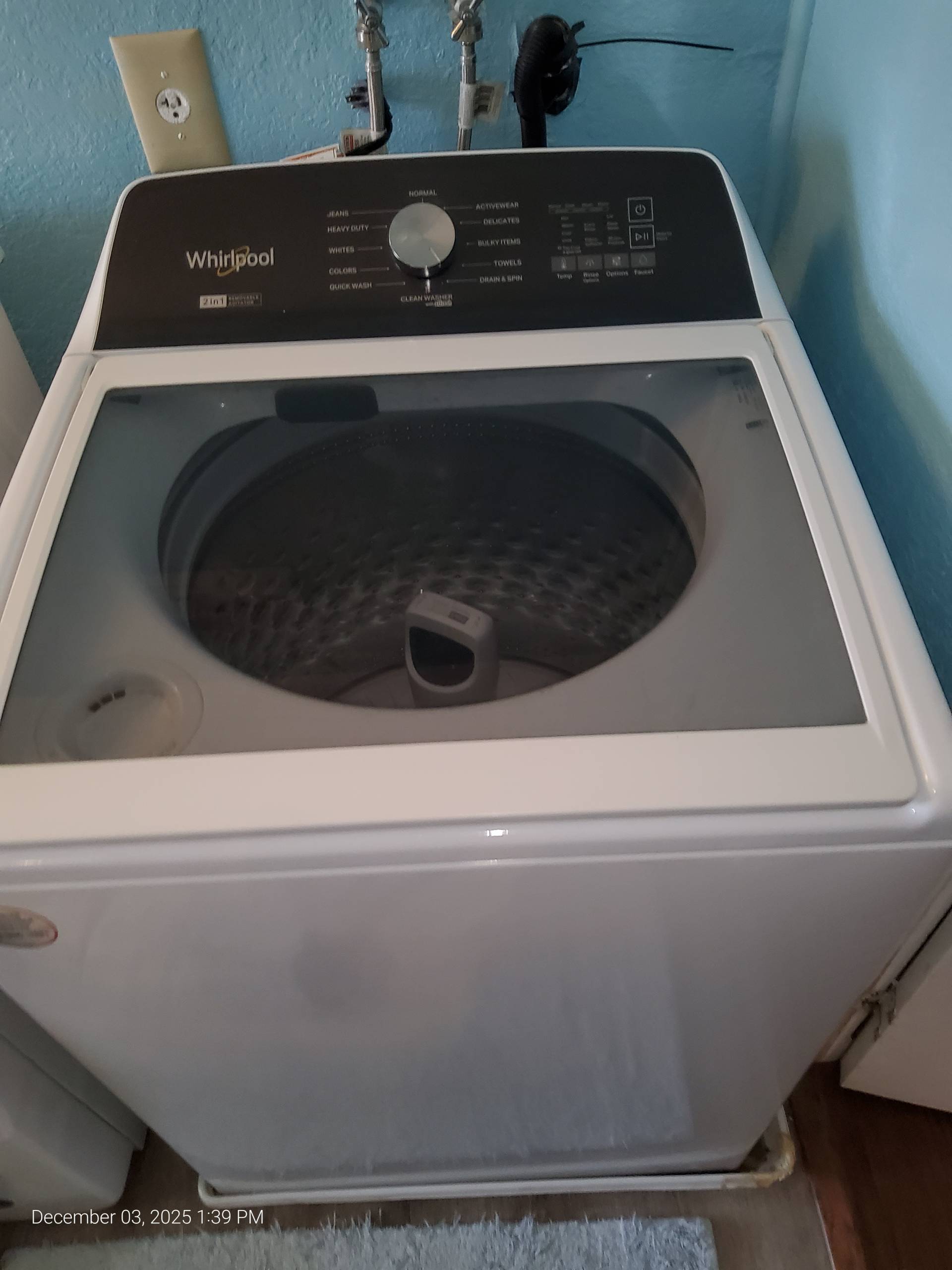
When a wash cycle finishes, clothes should feel damp but not excessively heavy. If every load seems saturated with water, takes much longer to dry, or feels noticeably heavier than usual, the problem often goes beyond a simple spin-cycle issue. Excess moisture left in laundry is usually a symptom of an underlying mechanical or drainage problem that should not be ignored.
Many homeowners assume that heavier clothes simply mean the washer used more water during the cycle. In reality, modern washing machines are designed to remove most of that water during the final spin. When that process is interrupted, fabrics retain far more moisture than they should, making drying less efficient and placing unnecessary strain on both the washer and the dryer.
Incomplete Water Drainage
One of the most common reasons for excess moisture is poor drainage. During the wash and rinse cycles, dirty water must be pumped out quickly before the spin cycle begins. If the drain pump is partially clogged with lint, coins, hair, or small fabric fibers, water may not leave the drum completely. A drain hose can also become kinked, restricted, or partially blocked. Even a small obstruction slows water flow enough to affect the washer’s ability to remove moisture from clothing. In many cases, the machine completes the cycle without displaying an error code, making the problem difficult to recognize until laundry repeatedly comes out soaking wet. Ignoring drainage problems can eventually overwork the drain pump, increasing the likelihood of complete pump failure.Reduced Spin Performance
The spin cycle removes water by rotating the drum at very high speeds. If the washer cannot safely reach its intended RPM, clothes will retain significantly more moisture. Several mechanical components can reduce spin performance, including:- Worn suspension rods or shock absorbers
- Damaged drum bearings
- A slipping drive belt
- A worn drive hub or clutch assembly
- Motor performance issues
Unbalanced Loads
Not every heavy load indicates a mechanical failure. Washing bulky blankets, comforters, or several heavy towels together can create an uneven distribution inside the drum. If the washer cannot balance the load, it may shorten or cancel the high-speed spin cycle. The program finishes normally, but the laundry remains wetter than expected. Redistributing the load and avoiding overloading the drum often resolves this issue. However, if it occurs with normal everyday loads, the machine likely requires inspection.Drain Filter Restrictions
Many front-load washing machines include a drain filter designed to catch lint, buttons, coins, and other small objects before they reach the pump. When this filter becomes clogged, water exits the machine more slowly. As a result, the spin cycle cannot remove moisture efficiently because excess water remains inside the drum. Routine cleaning of the drain filter according to the manufacturer’s recommendations helps maintain proper drainage and reduces unnecessary stress on the pump.Detergent Buildup
Using too much detergent may seem harmless, but excessive soap creates another moisture retention problem. High-efficiency washers require relatively small amounts of detergent. Overdosing produces excessive suds that interfere with proper rinsing and spinning. Soap residue can also accumulate inside hoses, pumps, and the outer drum, restricting water flow over time. Signs of detergent buildup include:- Sticky residue inside the drum
- White streaks on clothing
- Persistent soap odor
- Longer rinse cycles
- Clothes feeling unusually heavy after washing
Faulty Water Level or Pressure Sensor
Modern washers rely on pressure sensors to determine how much water remains inside the tub. If the sensor provides inaccurate readings, the control board may begin spinning before drainage is complete or may reduce spin performance unnecessarily. Because these sensors communicate directly with the electronic control system, diagnosing the issue typically requires specialized testing equipment.Control Board Problems
Although less common, electronic control failures can also contribute to moisture retention. The control board coordinates pump operation, motor speed, and cycle timing. If one of its circuits malfunctions, the washer may:- End the spin cycle too early
- Skip portions of the drainage sequence
- Limit motor speed
- Leave excess water inside the drum
Why Excess Moisture Shouldn’t Be Ignored
Laundry that consistently comes out overly wet affects far more than drying time. Extra moisture forces dryers to run longer, increasing electricity consumption and accelerating wear on heating elements, motors, and belts. Clothing also experiences more prolonged exposure to heat, which can fade colors, weaken fibers, and shorten garment lifespan. Inside the washer, trapped moisture encourages mold and mildew growth around the door gasket, detergent dispenser, hoses, and drain system. Over time, unpleasant odors develop and become increasingly difficult to remove. Persistent moisture problems can also indicate developing mechanical failures that become significantly more expensive if left unaddressed.What You Can Check Yourself
Before scheduling service, there are a few simple inspections homeowners can safely perform:- Avoid overloading the washer.
- Redistribute bulky items evenly.
- Verify that the drain hose is not kinked or crushed.
- Clean the drain filter if your washer has one.
- Use only the recommended amount of HE detergent.
- Run a cleaning cycle to remove detergent residue.